
Results & Reviews
Development Looks Different at Every Level.
“I've been fortunate to be a small part of a lot of baseball journeys.” — Justin Sizemore
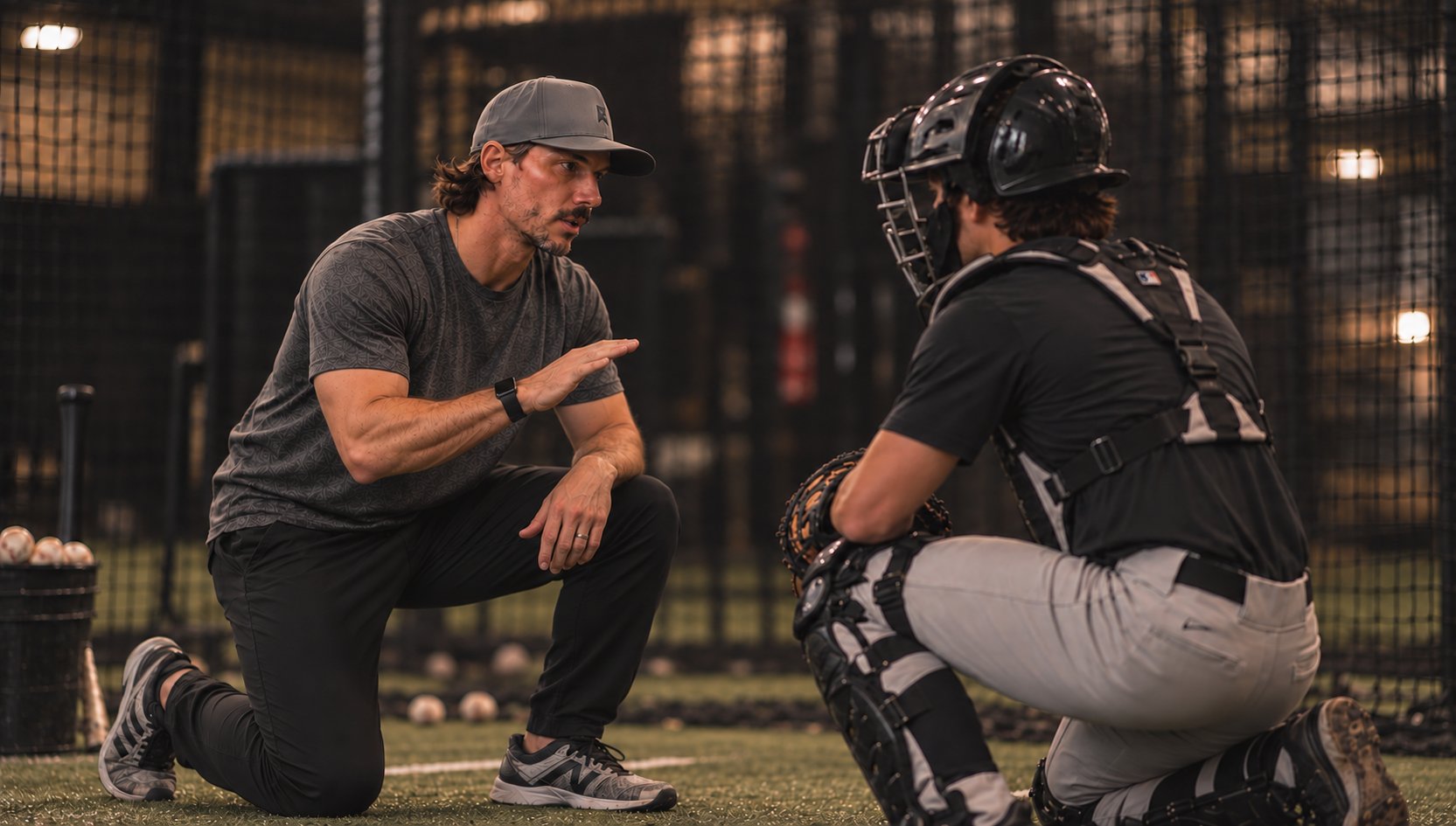
Every Level
Meeting athletes where they are.
Youth
Helping younger athletes build foundational skills and earn opportunities with competitive programs.
High School
Helping athletes progress toward varsity opportunities and prepare for higher levels.
College
Working with collegiate athletes as they continue developing and pursuing greater opportunities.
Professional
Justin has had the opportunity to coach collegiate athletes who eventually continued into professional baseball.
Testimonials
What People Say
Some testimonials shown are placeholders until approved quotes are added.
I can't recommend SIZE enough. Braden had been struggling at the plate, and it was starting to affect his confidence. Coach Size took the time to understand what Braden needed, worked with him patiently, and helped him believe in himself again. I've seen a real difference in the way Braden approaches each at-bat. As a parent, seeing that confidence come back means so much.
M. Territo
Parent of a 15U Player
What stands out most about Coach Justin is the connection he has built with my son. He doesn't just tell him what to do, he takes the time to teach him the “why” behind each building block, which has helped my son better understand the game and become more confident in what he's doing. Justin knows when to push him and how to communicate in a way my son responds to, and as a parent, that's exactly what I was looking for in a coach.
E. Rudder
Parent of a 9U Player
Coach Justin has been an amazing coach both as a teacher and as a mentor when it comes to hitting. His ability to teach the nuances of technique and down to earth style that connects with kids made it an amazing experience. He's coached both of my sons and the first person I call when thinking of hitting instruction.
G. Ross
Parent of 12U Player
Justin does more than teach hitting—he teaches hitters how to think. His detailed video analysis, individualized programming, and approach to each at-bat gave Hunter the tools and confidence to take control of his development. After struggling through a 15-at-bat slump as a freshman, Hunter went on to earn Conference Rookie of the Year and became the only freshman selected First Team All-Conference.
Hunter St. Denis
NCAA Division I Player · Parent
I can’t recommend Dece Baseball enough. I love when any of our guys go there because you see results. Whether it’s hitting, catching, or just learning the game at a higher level, our guys always come back better. Dece can develop players of all ages. Justin knows how to keep it simple and see big results. I love sending players to Dece because you know they’ll get better and love the game more after.
David Thompson
Former University of Miami and NY Met
I first met Size and started working with him during my senior year of high school. He is a very knowledgeable baseball mind, that understands the physical and mental aspects of the game to become successful. I was undersized, didn't hit for power, and didn't have a ton of college offers. Size was one of the very few guys that believed in me, which helped me believe in myself and continue to play baseball at the professional level.
Sam Schner
Former High Point University · Current Professional Player
I met Justin during my first collegiate summer season, when he was my head coach. He has helped me immensely throughout my career and pushed me to become the best player I could be. Whether it was hitting mechanics, the mental approach to the game, or small tips no one had ever shared with me before, he always took the time to make sure every one of his players was coached to the best of his ability. I continued working with Justin all the way to the professional level, and I can’t thank him enough for what he’s done for me. I highly recommend him to anyone looking to improve their game in any way. On top of being a great coach, Justin is an incredible person who cares about you off the field as much as he does on it. He is truly the best of the best.
Chris Schoeller Jr.
USPBL Professional · Former St. Thomas University
Having worked in the youth, high school, college, and professional arenas I’ve been around some of the best baseball people out there. I feel privileged to have worked alongside and learned from Justin. He has the understanding and patience to make sense of a very tough game. He has a rare combination of being able to relate the game of life and baseball with his candor and truthfulness. Justin has a great ability to evaluate a player and diagnose what the inefficiencies are in a very short time. His experience has given him the tools and resources to start the process of correction through a series of drills and information. However, it’s the opportunity to be around him daily that truly pays off. All ball players are created differently and they think differently. His uncanny knack to speak the right words to a multitude of personalities and have it make sense is what separates him from most.
Beau McMillan
Florida/Texas Head Scout · Elite Sports Advising · Former Lynn University
Placeholder testimonial. Replace with a real quote from a high school hitter about the training process and game transfer.
Player Name
Class of 2027 · Varsity
Placeholder testimonial. Replace with a real quote from a college player about remote development or in-person work.
Player Name
NCAA Division I Infielder
Case Studies
Case Studies
Each case study follows the same structure: Player → The Problem → What We Saw → Training Focus → What Changed → Result.
Hunter St. Denis
College Hitter · University of Maine
The Problem
Hunter already had the ability to produce at the college level, but his best swings weren’t showing up consistently. The goal was to create more bat speed and power without sacrificing barrel control, while improving his ability to handle velocity and different pitch locations.
What We Saw
Video, Blast Motion data, and ball flight showed a hitter with good connection and on-plane efficiency, but inconsistent barrel direction and attack angle. His swing quality could change depending on pitch height and timing, especially when moving from controlled work into more game-like environments.
Training Focus
We prioritized a more repeatable barrel path, maintaining connection through the turn, and creating speed without forcing it. Training progressed from controlled tee and toss work into variable locations, velocity, machine work, and decision-based training so the swing had to adjust rather than simply repeat a pattern.
What Changed
Hunter began producing significantly more speed and rotational force while maintaining his efficiency. His early-August performance data showed roughly 61.6 mph average bat speed, 17.4 G rotational acceleration, and 3.62 kW of power. In a later machine assessment, those numbers reached 71.3 mph, 26.3 G, and 5.25 kW, while on-plane efficiency remained around 85%. The next phase has been making that higher-output swing more repeatable. Recent soft-toss work has consistently been in the 66–69 mph range, with individual swings reaching 75.5 mph.
Result
Hunter now has a considerably higher physical ceiling than when we started, without giving up the connection and barrel efficiency that made his swing effective. The focus has moved from simply developing more output to making that output repeatable against changing speeds, locations, and game-like decisions.
Before / After
David Williams
College Hitter · Dominican University
The Problem
David had plenty of bat speed and power potential, but inconsistent barrel delivery was limiting his ability to use it consistently. He tended to get steep early, lose posture, and work across the ball, which made elevated and outside pitches more difficult to handle.
What We Saw
Video and Blast data pointed toward a consistency issue rather than a lack of physical ability. Early connection was often too loose, his barrel wasn't staying on plane long enough, and posture and body tilt could change significantly from swing to swing. His best swings were very good—the challenge was making those swings repeatable.
Training Focus
We focused on improving early connection, creating a more efficient barrel path, and stabilizing his lower half and posture. Training emphasized staying centered, controlling body tilt, creating better barrel depth and direction, and maintaining those positions as we progressed from tee work into moving-ball environments.
What Changed
David began producing more speed while becoming more connected and efficient. From September 14 to September 23, his average bat speed increased from 69.1 to 71.7 mph, rotational acceleration increased from 8.5 G to 13.3 G, and power increased from 4.04 to 4.65 kW. His early connection tightened from 107.0° to 102.9° while his on-plane efficiency also improved.
Result
David is now producing higher-output swings from a more connected position. Instead of chasing additional bat speed, the focus has shifted toward making his improved barrel delivery and posture hold up against velocity, changing locations, and game-like decisions.
Before / After
High School Hitter
Class of 20XX
The Problem
Placeholder: what the athlete believed was holding them back.
What We Saw
Placeholder: what video, Blast data, and ball flight showed.
Training Focus
Placeholder: the specific training priorities that were chosen.
What Changed
Placeholder: the movement, timing, or approach changes that showed up.
Result
Placeholder: what transferred to the game.
Before / After
College Hitter
NCAA
The Problem
Placeholder: what the athlete believed was holding them back.
What We Saw
Placeholder: what video, Blast data, and ball flight showed.
Training Focus
Placeholder: the specific training priorities that were chosen.
What Changed
Placeholder: the movement, timing, or approach changes that showed up.
Result
Placeholder: what transferred to the game.
Before / After
Youth Catcher
13U
The Problem
Placeholder: what the athlete believed was holding them back.
What We Saw
Placeholder: what video and live reps showed.
Training Focus
Placeholder: the specific training priorities that were chosen.
What Changed
Placeholder: the setup, receiving, or throwing changes that showed up.
Result
Placeholder: what transferred to the game.
Ready to Get Better?
Tell Justin where you are, where you want to go, and what you believe is holding you back.